Languages
Concepts of Languages
These are the concepts you need to know about languages.
-
Base Language: A base language serves as the source reference for all other language translations. It cannot be changed once the project is created.
-
Default Country: This sets the default country for the language. It controls which default flag is shown and which locale AI should target.
-
Variations: This is a great feature that adds extra flexibility on the language. Instead of creating a whole new language to manage when you want region specific translations, just add an extra variation for the language. Then in the editor, a translator can change the translation for a specific locale, rather than creating a whole new language. For example, you could have English with variations for "US" and "UK" to handle regional differences like "color" vs "colour", or Spanish with variations for "Spain" and "Mexico" to accommodate regional terminology.
-
Dictionary: Attach custom dictionaries that enhance spellchecking. Dictionary items are added from within the editor. Not to be mixed with Glossaries
Create
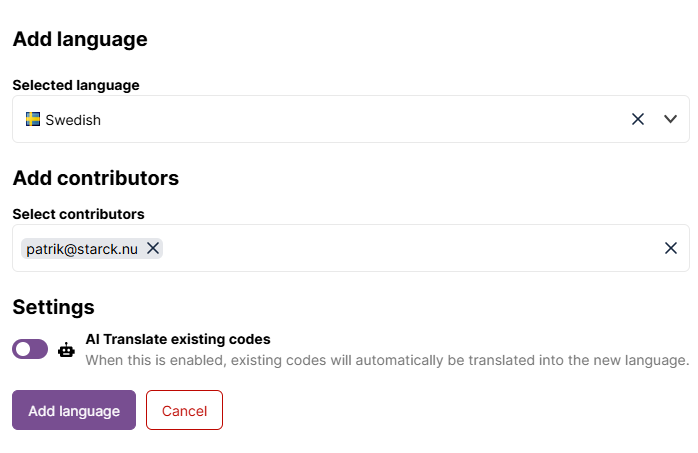
Simply click the "Add Language" button and choose the desired language. Variations, default country and members can be added here as well.
When creating a new language, you have the option to AI Translate existing codes. If this option is checked, all existing keys in your project will be automatically translated to the new language using AI. This is especially useful when adding a new language to an existing project, as it provides initial translations that can then be reviewed and refined by translators.
Edit
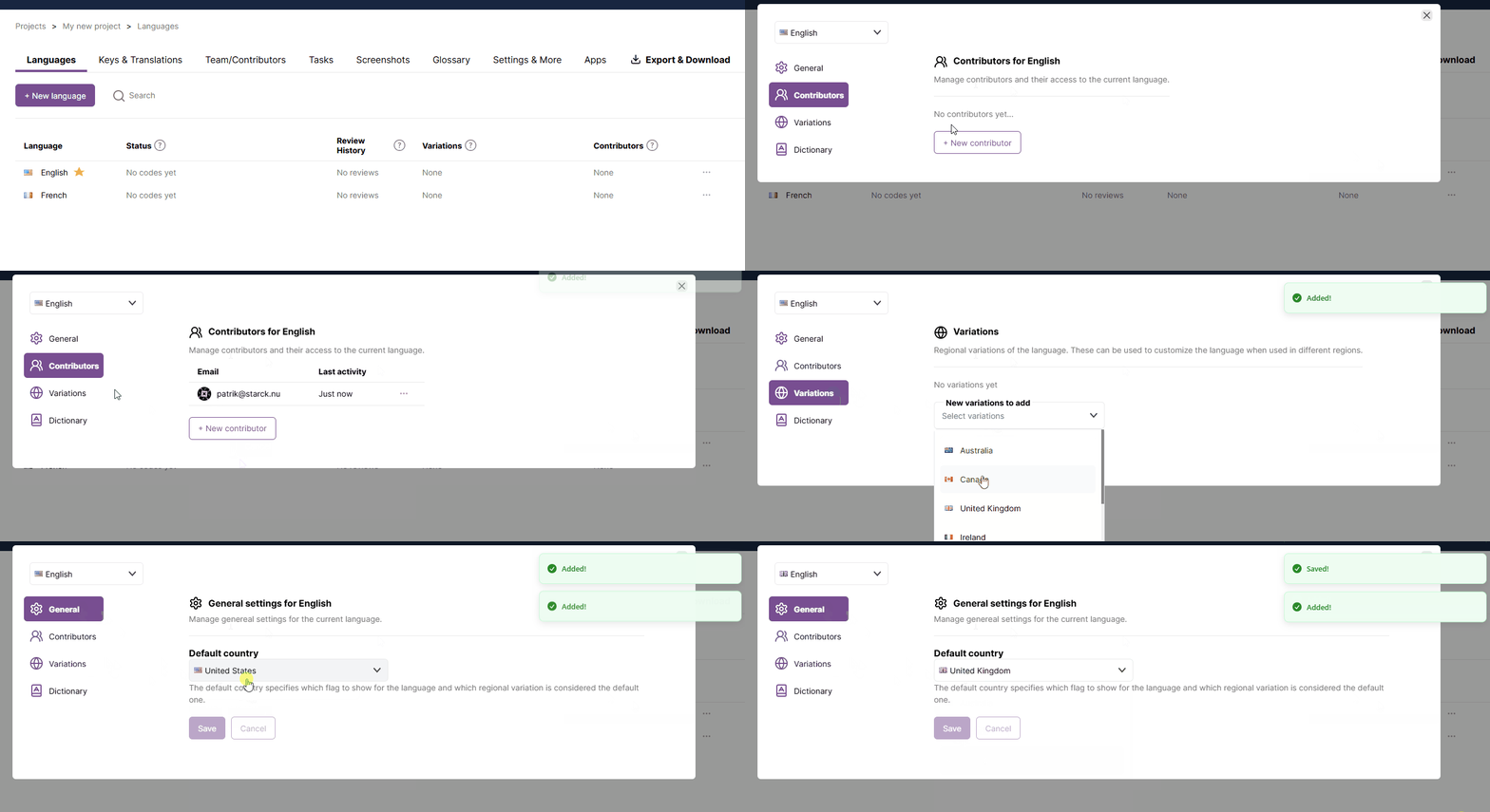
Easily update language details such as variations, members, and default country.
Statistics
Each language displays useful statistics to help you track translation progress:
- Total Number of Words: The total number of words across all translations in this language
- Number of Translated Keys: How many keys have been translated (at least one translation value exists)
- Number of Reviewed Keys: How many keys have been marked as reviewed
- Latest Activity: The date and time of the most recent translation change or review event
These statistics help you monitor the translation status of each language and identify which languages need more attention.